
The Carbon Intensity Indicator: 3 years in
15 April 2026
In January 2023, CII regulations came into force. The shipping industry faced a new era of carbon accountability, now required to report energy efficiency performance annually and to take action when they fail to meet the CII threshold. Three years in, CII has been adopted, and the requirements have evolved. Here's what fleet managers, ship owners, and bridge crews need to know about CII in 2026.
How is CII calculated?
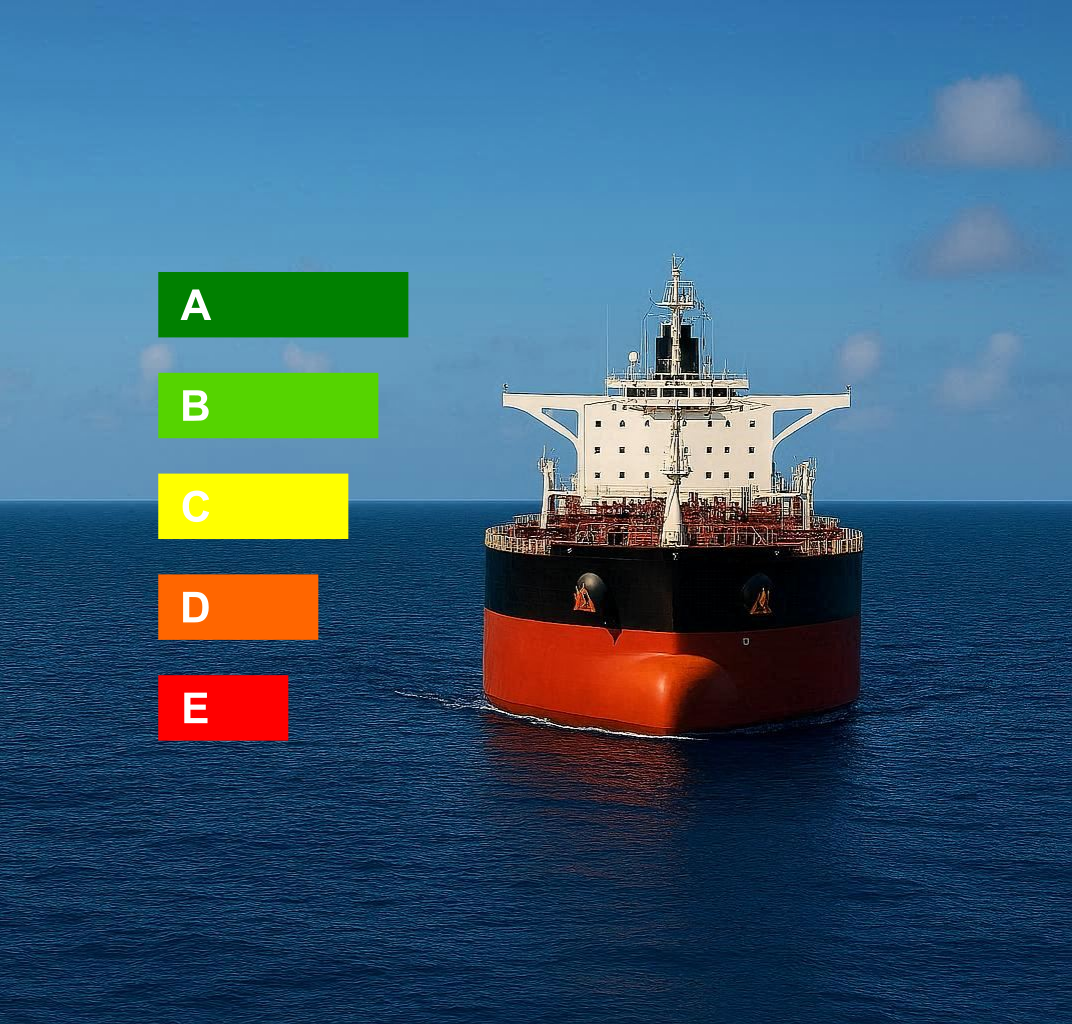
CII is an International Maritime Organisation (IMO) regulation that measures carbon efficiency. The calculation comes down to dividing the annual CO₂ emissions by the product of cargo-carrying capacity and distance travelled. Correction factors and other variables make the calculations more complex, but also more accurate. The result, expressed in grams of CO₂ per capacity-nautical mile, is then compared against reference values to assign ratings from A (best) to E (worst).
Ships must achieve at least a C rating to maintain compliance. Those receiving a D rating for three consecutive years or an E rating in a single year must submit a corrective action plan.
What's changed since CII came into effect in 2023?
The most significant change is simple but critical. The targets for achieving a C rating get 2% stricter every year, meaning that a ship that got a C rating in 2023, might get a D rating in 2026 if operations did not evolve. If that is the case, the vessel will need to take measures to ensure compliance. What’s more, some sources state that CII now has a commercial impact as well: on charter negotiations, financing terms, asset valuation and charter rates.
The CII framework creates the need for ongoing, accurate and intelligent monitoring, analysis and optimisation of environmental performance, with a broad range of measures to lower carbon intensity.
What operational strategies help improve your CII rating?
- Speed optimisation: Adapting speed remains the single largest operational lever. Fuel consumption increases exponentially with speed. However, the commercial trade-off between slower speeds and voyage economics requires careful analysis for each trade pattern.
- Just-in-time arrival: Reducing anchorage waiting time eliminates fuel consumption that generates emissions without transport work, directly improving CII calculations.
- Hull and propeller maintenance: Proactive cleaning regimes deliver measurable benefits.
- Weather routing and voyage planning: Intelligent routing considering ocean conditions, currents, and weather patterns can reduce fuel consumption by several percentage points without extending voyage time.
- Alternative fuels: Adoption of low-carbon fuels provides direct CII benefits, though commercial availability and infrastructure remain considerations.
Easier reporting and optimisation with CII dashboards
CII ratings are determined by daily operational decisions. If you only do the calculations once a year, when required by the IMO regulations, it might be too late to take appropriate action. What’s more, manually calculating CII is an intensive and error-prone process. Digital tools like the ChartTrack CII Dashboard allow vessels and fleet managers to minimise fuel consumption and optimise CII through machine learning.
- It provides an overview of yearly CII ratings, per vessel or for the entire fleet
- It generates vessel voyage charts, graphical representations of the vessel’s past voyages and CII ratings
- It allows you to create CII forecasts based on past voyages and their CII ratings
- Bridge crew can import noon-report files hassle-free, ensuring that the dashboard always uses the correct data without requiring extra manual data submissions
In short: digital tools like our CII dashboard support a data-driven approach, providing fleet managers and bridge crews with the tools to monitor performance, forecast ratings, and identify optimisation opportunities without adding administrative burden to shipboard operations.
What happens next?
CII requirements will continue to tighten through 2030 and beyond.
After three years of CII implementation, the industry has moved from learning the rules to optimising performance within them. The vessels succeeding are those treating CII as an operational KPI requiring continuous attention, reliable data, and integrated solutions, not an annual reporting exercise.
Need support managing CII performance across your fleet?
Contact us at sales@bogerdmartin.com to discuss how our integrated solutions can help you maintain compliance whilst optimising operational efficiency.